

Last Updated: November 19, 2026
Quick Summary
To get the right hoodie fit, measure your chest, shoulder width, and torso length first, then check that the shoulder seam sits at your natural shoulder, the sleeve ends at your wrist bone, and the hem lands around your mid-hip. Choose regular, slim, or oversized based on the look you want, and size up on cotton blends if you are between sizes.
- A chest measurement of 35-38 inches is typically recommended for a size Medium hoodie.
- Garment sizing tolerances can vary by up to ±1 inch between brands.
- Heavier fleece holds a boxy cut, while lighter cotton blends collapse closer to the body.
- Cotton hoodies can shrink after the first wash, especially in length, so size up if between sizes.
- Oversized styling works when you pair a roomy hoodie with slim or straight-leg trousers.
Table of Contents
- Start With Your Own Body Measurements, Not the Size Tag
- How a Hoodie Should Fit: Shoulder Seam, Sleeve, and Hem Checks
- Regular, Oversized, or Slim: Picking the Fit Type for Your Look
- A Heavyweight Cotton Hoodie Sizing Guide for Real Fabric Behavior
- How to Style Oversized Hoodies Without Looking Sloppy
- Height, Layering, and Activity: Fit Adjustments Most Guides Skip
- Lock In Your Hoodie Size With Drippy Tee's Official
- Frequently Asked Questions
Start With Your Own Body Measurements, Not the Size Tag
Most people get their hoodie fit wrong because they shop by the letter on the tag instead of the numbers on their body. A "Medium" means something different at every brand, and manufacturing tolerances for garment sizing can vary by up to ±1 inch according to EventShop's apparel sizing guidance. That inch is the difference between a clean shoulder line and a hoodie that swallows you. At Drippy Tee's Official, we would rather you spend five minutes with a tape measure than a week waiting on a return.
The Three Numbers That Decide Your Hoodie Fit
Three measurements drive everything: chest circumference, torso length, and shoulder width. A chest measurement of 35-38 inches is typically recommended for a size Medium hoodie, per sizing discussion benchmarks on Quora, but that is a starting point, not a verdict. Your height and the silhouette you want will pull that number up or down.
How to Measure Yourself in Under Five Minutes
- Chest: Wrap the tape around the fullest part of your chest, under your arms, keeping it level. Breathe normally.
- Shoulder width: Measure from the edge of one shoulder bone to the other across your back.
- Torso length: Run the tape from the base of your neck to your mid-hip.
- Sleeve: Measure from your shoulder point to the wrist bone with your arm slightly bent.
Write all four down. That is your baseline for every hoodie you buy from here on.
How a Hoodie Should Fit: Shoulder Seam, Sleeve, and Hem Checks
A well-fitting hoodie puts the shoulder seam at your natural shoulder, ends the sleeve at your wrist bone, and finishes the hemline around your mid-hip. Miss any of those three and the whole silhouette reads off, no matter how good the graphic is.
The shoulder seam is the fastest fit check. It should sit where your shoulder actually ends, not hanging down your arm.
Regular, Oversized, or Slim: Picking the Fit Type for Your Look
Fit type is a style decision, not a size decision. Regular fit follows your body with a little slack. Slim fit tapers through the torso and sits close at the armhole. Oversized fit is deliberately roomy, and the best versions use a drop shoulder construction so the garment looks loose rather than ill-fitting, a trend streetwear discussions on Reddit's MaleFashionAdvice have tracked closely.
| Fit Type | Shoulder Seam | Best For | Watch Out For |
|---|---|---|---|
| Regular | At natural shoulder | Everyday wear, layering | Can feel boxy if you size up |
| Slim | At natural shoulder, tapered body | Leaner frames, sharp looks | Tight armholes restrict movement |
| Oversized | Dropped past shoulder | Streetwear looks, layering | Sloppy if the hem is too long |
If you want curated examples of how each cut looks in context, our streetwear hoodie picks for Gen Z show the styles side by side.
A Heavyweight Cotton Hoodie Sizing Guide for Real Fabric Behavior
Fabric weight changes the fit you actually get, and it changes it again after the first wash. A heavyweight fleece holds its shape and drapes with structure, while a lighter cotton blend collapses closer to the body. According to 1620 USA's guide to hoodie fabric weight and fit, the weight number is essential for predicting how a garment will drape, because heavier fabrics influence the structure of the cut.
Why Fabric Weight Changes How a Hoodie Drapes
Heavyweight cotton keeps a boxy cut looking intentional. Thin fabric clings to the torso and exposes every layer underneath. If you want the oversized silhouette to hold, go heavier. The mechanism is simple: a heavier knit has more mass per square yard, so it resists collapsing into body contours and hangs from the shoulder seam instead of draping from the chest. That is why two hoodies labeled the same size can look completely different on the same person.
As a general guide, a heavier fleece gives a more structured, streetwear-ready look, while a lighter blend gives a relaxed, close-to-body fit.
Shrinkage: What to Expect After the First Wash
Cotton hoodies can shrink after the first wash, especially in length, so if you are between sizes on a cotton blend, consider sizing up.
The amount depends on the material, not just the brand:
- 100% cotton or cotton-rich fleece: expect the most movement, typically in body length and sleeve length. A common pattern is for the torso to shorten enough that a hem which started at mid-hip sits closer to the waist.
- Cotton-poly blends: shrink less and more evenly, because the synthetic fiber helps the garment hold its original dimensions. Fit changes are usually subtle rather than dramatic.
- Heavyweight fleece: shrinks less in proportion to its weight, but because the fabric is stiff when new, it may feel like it "relaxes" into the body after a wash rather than shrinking.
Watch out: judging fit from a brand-new cotton hoodie before washing it can lead you to size down, and then the first wash pulls the hem and sleeves shorter than you wanted. Wash cold and air-dry when you want to minimize movement; heat is what drives most cotton shrinkage.
For a deeper look at fabric choice, read our guide on choosing a heavyweight anime hoodie that lasts.
How to Style Oversized Hoodies Without Looking Sloppy
Oversized styling works when one half of the outfit is fitted. Pair a roomy hoodie with slim or straight-leg trousers, keep the hem above mid-thigh, and let the shoulders drop without the sleeves swallowing your hands. Balance is the whole trick: volume on top, structure below. Layer a fitted tee underneath so the neckline stays clean, and roll the cuffs once if the sleeve runs long. For outfit formulas you can copy directly, our oversized hoodie outfit ideas put the rules into practice.
Height, Layering, and Activity: Fit Adjustments Most Guides Skip
Height changes everything about a size chart. Taller shoppers need extra torso length or the hem rides up; shorter shoppers need a shorter body or the hoodie looks like a dress. Layering follows one standard: each successive layer should have slightly more volume than the one underneath, per Roguehood Shop's layering guidance, so a hoodie over a tee should have room to move.
Activity matters too. A hoodie for sitting in class can run relaxed; one for skating or gym warmups needs a tighter cuff and a shorter hem so it does not catch. A common mistake is buying the same size for both.
Fit by Body Type: What the Size Chart Does Not Tell You
Most guides stop at height and activity. The bigger variable is build, because the same labeled size reads completely differently on an athletic frame than on a slim or husky one. Use these as starting adjustments on top of your measured baseline:
- Athletic or broad-shouldered builds: the chest and shoulders fill a regular fit quickly, so the shoulder seam can pull inward and the armhole can feel tight. Size for your chest measurement first, then check that the shoulder seam still lands at your natural shoulder. If it does not, an oversized or drop-shoulder cut gives room without sizing up the whole garment.
- Slim builds: a regular fit can hang loose through the torso and look boxy. A slim or tapered cut follows the body without clinging, and a slightly shorter hem keeps proportion clean. Avoid sizing up just to get shoulder room, because the body will balloon.
- Husky or fuller builds: the priority is a hem that clears the hip without riding up and a chest that closes without strain. A regular fit with a straight hem usually works better than a slim cut, and a drop shoulder can add room through the upper body without pulling at the armhole.
Watch out: sizing up to fix one problem area (shoulders, chest, or hip) usually creates a new problem somewhere else, such as a hem that hangs too low or sleeves that swallow your hands. Match the size to your largest relevant measurement, then use the cut to fix the rest.
Fit by Activity: Gym, Streetwear, and Loungewear
The right fit also depends on what the hoodie is for:
- Athletic performance (gym, running, warmups): prioritize a shorter hem, a snug cuff, and enough armhole room to raise your arms overhead without the body riding up. A relaxed streetwear cut gets in the way here.
- Streetwear and lifestyle: this is where oversized and drop-shoulder cuts earn their place. The goal is deliberate volume, balanced by a hem that stays above mid-thigh.
- Loungewear: a regular or slightly relaxed fit in a softer, lighter fabric moves with you and layers easily over a tee.
If you want curated examples of how each cut looks in context, our streetwear hoodie picks for Gen Z show the styles side by side.
Lock In Your Hoodie Size With Drippy Tee's Official
Once you know your chest, shoulder, and torso numbers, buying gets simple. Our unisex heavy blend hoodies are available in sizes S-5XL at $40, so you can size from your measurements. The DTO Don't Hate Meditate hoodie and the DTO Cash Culture hoodie are both listed with a regular fit.
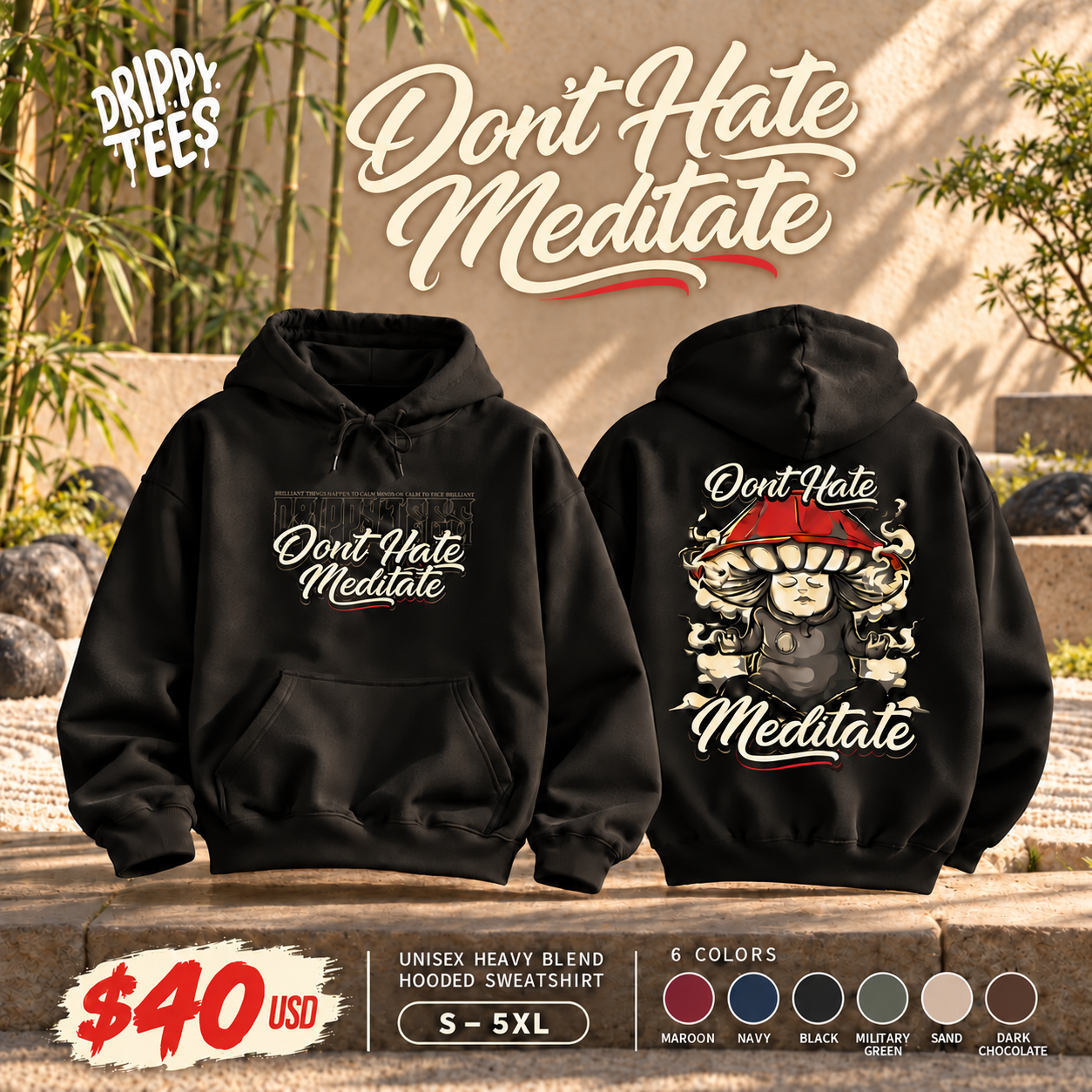

The real challenge is not finding a hoodie. It is finding one where the fit, the fabric, and the graphic all hold up together. Drippy Tee's Official builds unisex heavy blend hoodies with bold original graphics, a regular fit that follows your measurements, and sizes from S to 5XL, so you can wear your confidence without guessing.
Frequently Asked Questions
Is it better to size up or down in hoodies?
Size up if you want an oversized streetwear look or plan to layer a tee underneath. A size Medium typically suits a 35-38 inch chest, so going one size up from your measured size gives you room without the hoodie swallowing you. Size down only if you want a closer, slim fit and the brand's size chart confirms a smaller chest range works. Always check the specific size chart first, because manufacturing tolerances can vary by up to an inch between brands.
How do I know what size hoodie to get?
Measure your chest circumference at its fullest point, then compare that number to the brand's size chart. Add your height and preferred silhouette to the decision: a 35-38 inch chest usually lands in a Medium for a standard fit. If you want a boxy, drop-shoulder look, move up one size. For a heavyweight cotton hoodie sizing guide, remember that heavier fleece holds its shape, so the size you pick is close to the size you keep.
Should hoodies be baggy or tight?
Neither extreme works for everyday wear. A well-fitted hoodie has shoulder seams sitting on your natural shoulder, sleeves ending near the wrist bone, and a hemline around mid-hip. Baggy is fine if it is intentional: drop-shoulder designs are built to look loose without looking ill-fitting. Tight hoodies restrict arm movement and pull at the armhole. Aim for a couple of inches of slack in the torso so the fabric drapes instead of clinging.
What are the signs that a hoodie is too small?
Watch for shoulder seams creeping toward your neck, sleeves stopping above the wrist bone, and a hemline that rides up above your waistband when you raise your arms. Cuff tension is another giveaway: if the cuffs dig in or the fabric bunches at the armhole, the hoodie is too small. A too-small hoodie also loses its silhouette after washing, especially in cotton blends that shrink. If any of these show up in a fit check, size up.
