

Last Updated: November 1, 2026
Quick Summary
Wash graphic tees inside out in cold water on a gentle cycle with mild detergent, then air-dry. This graphic tee care routine protects prints from friction, heat, and chemical damage, since high heat is the number one cause of print cracking and peeling. Skip bleach, fabric softener, and direct ironing on the design.
- Turn the shirt inside out so the print avoids zippers, buttons, and rough seams.
- Wash graphic tees in a separate load from jeans and towels.
- Air-dry in a shaded spot, since sun exposure fades ink over time.
- Never iron directly on a print; use low heat, no steam, and a cloth barrier.
- Store shirts clean, dry, and folded in a ventilated spot.
Table of Contents
- Why Graphic Tee Care Decides How Long Your Prints Last
- How to Wash Graphic Tees Without Damaging the Print
- How to Dry Graphic Tees to Prevent Cracking and Fading
- How to Iron Screen-Printed Shirts Without Melting the Ink
- How Long Do T-Shirts Last? Realistic Lifespans by Fabric and Print
- Care Tips by Print Method and Fabric Type
- Stain Removal and Fixes for Damaged Prints
- Shop Heavy-Cotton Graphic Tees Built to Last
- Frequently Asked Questions
Why Graphic Tee Care Decides How Long Your Prints Last
A graphic tee is only as good as its print, and most prints die young. Heat, harsh detergent, and a hot dryer break down the ink bond that holds a design to the fabric. Get those three things right and a graphic tee care routine becomes simple: your favorite shirt stays bold for years instead of months. If a print has already started to crack, learn why cheap graphic tees crack and how to fix and prevent prints.
Heavy cotton is a fabric that can take real wear, so the right wash routine matters. But even the toughest shirt needs the right wash routine. Below, we'll show you exactly how to wash, dry, and iron a printed shirt so the design survives.
Here's the part most guides get wrong: cracking rarely starts in the wash. It starts in the dryer. energy-saving laundry guidance from the U.S. Department of Energy notes that high heat is tough on fabrics, and printed designs feel it first.
How to Wash Graphic Tees Without Damaging the Print
Wash graphic tees inside out in cold water on a gentle cycle with mild detergent, then air-dry. That one routine protects the print from friction, heat, and chemical damage. Everything else is a detail.
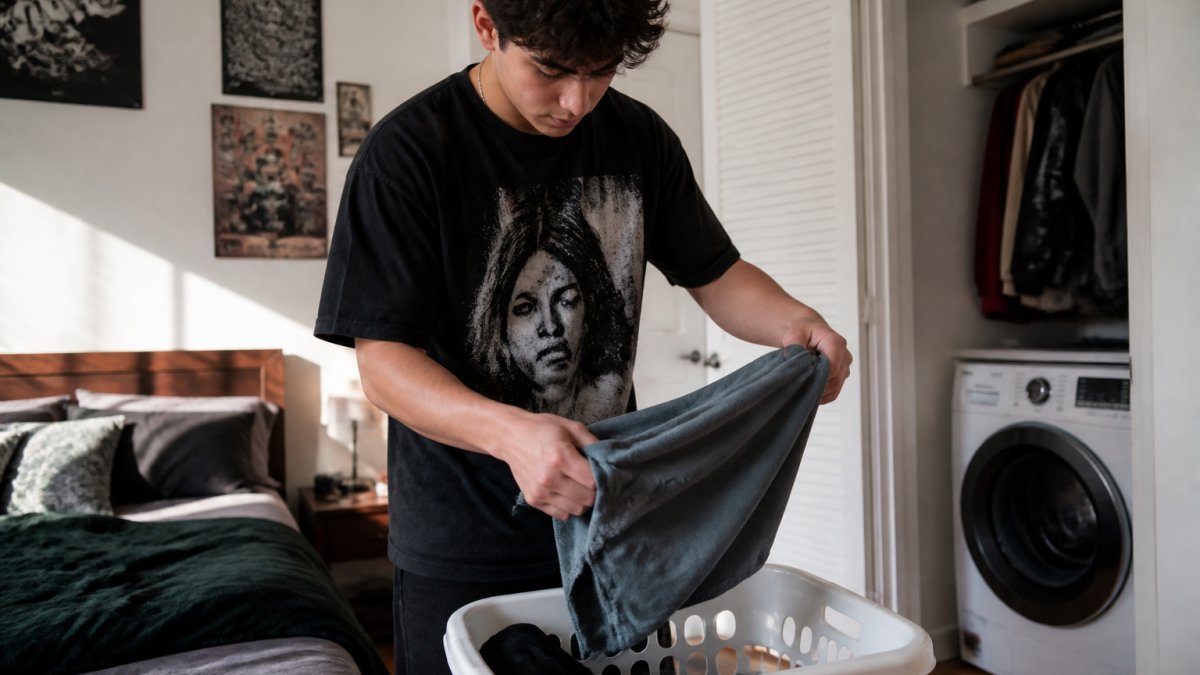
Turn It Inside Out and Use Cold Water
Turning the shirt inside out is the single easiest win. It puts the printed design against itself instead of against zippers, buttons, and rough seams.
Cold water matters just as much. Heat softens the ink and weakens its grip on the cotton fibers. A cold wash keeps the print stable and protects vibrant colors from fading.
Pick a Gentle Cycle and Mild Detergent
A gentle or delicate cycle spins slower and agitates less. That means less rubbing against the print.
Use a mild detergent, and skip bleach and harsh chemicals entirely. Fabric softener is another one to leave out; it coats fibers and dulls the print over time.
A few habits to lock in:
- Wash graphic tees in a separate laundry load from jeans and towels
- Close zippers and turn rough fabrics away from prints
- Treat stains gently instead of scrubbing hard
- Check the care label before the first wash
How to Dry Graphic Tees to Prevent Cracking and Fading
Air-dry graphic tees whenever possible. If you must use a machine, choose low heat and pull the shirt out while it is still slightly damp. High heat is the number one cause of print cracking and peeling.
Reshape the shirt while it is wet and hang it or lay it flat away from direct sun. Sun exposure fades ink over time, so a shaded spot is better than a sunny line.
Tumble drying on high heat does two bad things at once. It shrinks the cotton and hardens the ink film until it splits. Low heat, short cycles, and prompt removal keep the design intact.
How to Iron Screen-Printed Shirts Without Melting the Ink
Never iron directly on a printed design. Turn the shirt inside out, or place a thin cloth over the print, and use low heat with no steam. Direct heat melts and lifts screen print ink.
Drippy Tee's Obey The Rules Bold Graphic Unisex Heavy Cotton Tee - Angel →
Work around the design where you can. If the print covers a large area, iron the back of the shirt and let the front stay flat.
- Set the iron to low heat
- Skip the steam setting
- Move the iron in smooth, steady passes
- Hang the shirt right after ironing
How Long Do T-Shirts Last? Realistic Lifespans by Fabric and Print
| Factor | Longer Lifespan | Shorter Lifespan |
|---|---|---|
| Fabric weight | Heavy cotton | Thin, light cotton |
| Wash temp | Cold water, 30°C | Hot water |
| Drying | Air-dry, shaded | High heat tumble dry |
| Print method | Screen print | Heat transfer |
| Storage | Ventilated, folded | Damp, cramped drawer |
Care Tips by Print Method and Fabric Type
Print method and fabric blend can change how a graphic tee reacts to care, so it helps to tailor your routine to what is actually on the shirt.
Screen Print
- Wash inside out on a gentle cycle in cold water
- Avoid fabric softener, which can dull the ink surface
- Air-dry or tumble on low heat; high heat makes the ink film brittle
- When ironing, never touch the iron to the print; use a cloth barrier and low heat
Heat Transfer and Vinyl
- Keep wash temperatures cold and skip the dryer entirely if you can
- Do not iron directly on the design; a low-heat press with a cloth can settle small lifts but will not fix a fully peeled edge
- Avoid washing with heavy items that can catch and lift the edges
- Store folded rather than hung if the print is large, to reduce stress on the transfer
Direct-to-Garment (DTG)
- Cold water and mild detergent are essential
- Turn inside out to reduce abrasion against the print
- Avoid scrubbing stains directly on the print; blot instead
- Air-dry; high heat can cause the ink to fade unevenly
Fabric-Specific Notes
- 100% cotton: Can shrink in hot water and high heat. Expect some shrinkage on the first wash; cold water and air-drying minimize it. Heavy cotton holds shape well but takes longer to dry.
- Polyester and blends: Dry faster and resist shrinking, but they hold heat longer in the dryer, which can stress the print. Use low heat and remove promptly.
- Tri-blends: Soft and stretchy, which feels great but puts more flex on the print. Gentle cycles and air-drying help the print move with the fabric instead of cracking.
A simple rule: the more heat and friction a print method and fabric combination can tolerate, the more relaxed you can be. When in doubt, treat the shirt like the most delicate component, which is almost always the print.
Stain Removal and Fixes for Damaged Prints
Stains and damage are where good care routines get tested. The wrong move, like scrubbing a stain or pressing a cracked print with a hot iron, can turn a fixable problem into permanent damage. The key is to treat the stain without treating the print the same way.
Print-Conscious Stain Removal by Type
Always blot, never scrub. Scrubbing pushes pigment into the print and roughens the ink surface, which makes the stain harder to remove and the print more likely to crack.
- Oil and grease: Dab a small amount of mild detergent directly on the stain, let it sit for a few minutes, then wash cold. Avoid rubbing the print area; work from the back of the fabric if possible.
- Grass and mud: Soak in cold water before washing. Hot water can set the stain. Use a soft brush only on unprinted areas.
- Sweat and body oils: Wash promptly. Sitting damp causes mildew and odor, and body oils weaken the ink bond over time. A pre-soak in cold water with mild detergent helps.
- Ink and marker: Blot gently with a cloth dampened with rubbing alcohol, but test on an inside seam first. Avoid rubbing the printed area, as alcohol can dull some inks.
- Food and drink: Blot immediately, then flush with cold water from the back of the stain. Avoid harsh stain removers that contain bleach or strong solvents.
Fixing Cracked, Peeling, and Faded Prints
Realistic expectations matter here. You cannot fully reverse a cracked or peeling print, but you can slow the damage and sometimes settle small lifts.
- Cracked print: Cracking is usually permanent. A low-heat press with a cloth over the print can sometimes soften the edges, but it will not restore the design. Prevent further cracking by avoiding heat and friction.
- Peeling edges: A low-heat press with a cloth barrier can re-adhere small lifts on heat transfers and vinyl. Press for a few seconds at a time and check frequently. Do not use steam.
- Faded print: Fading is generally permanent. Prevent it by washing cold, avoiding direct sun when drying, and skipping harsh detergents.
- Accidental heat exposure: If a print has been ironed directly or dried on high heat, let it cool completely before handling. Do not try to stretch or reshape a warm print, as it can distort.
Storage and Prevention
Store shirts clean and dry in a ventilated spot to prevent mold and mildew. Fold rather than hang heavy tees to avoid stretching the shoulders, and keep prints away from direct sunlight in storage. A little prevention goes further than any repair.
Shop Heavy-Cotton Graphic Tees Built to Last
Care keeps a print alive, but the shirt has to start strong. Shop the Drippy Tees Hustler Unisex Heavy Cotton Tee for a durable graphic tee you can buy now. Our heavy cotton tees are built for everyday streetwear.
The Obey The Rules Bold Graphic Tee pairs a clean front with a statement back. Prefer something bolder? The Savage Heavy Cotton Tee brings a wolf graphic that stands out.


Both come in sizes S-5XL at $25, in a unisex fit.
Frequently Asked Questions
Should you wash graphic tees inside out?
Yes. Turning the shirt inside out before every wash is one of the simplest graphic tee care habits you can build. It keeps the printed design from rubbing against other garments, zippers, and the drum of the machine, which is what causes ink to crack and peel over time. Pair it with cold water and a gentle cycle.
Can you put graphic tees in the dryer?
You can, but low heat or air-dry is much safer for the print. High heat is the main cause of print cracking, peeling, and shrinking in heavy-cotton tees. If you need to machine dry, choose the lowest heat setting and pull the shirt out while it is still slightly damp, then hang it to finish. Air-drying flat or on a hanger preserves both the graphic and the fabric shape best. Never tumble dry a screen-printed shirt on high.
How do you prevent a graphic tee from cracking or fading?
Four habits do most of the work: wash in cold water at 30°C or below, turn the shirt inside out, use a mild detergent with no bleach, and avoid high heat in the dryer or iron. Wash graphic tees separately from rough fabrics like denim and towels, which abrade the print. Store shirts out of direct sun exposure in a ventilated space. Following the care label and these steps together is what separates a tee that lasts a couple of seasons from one that lasts years.
How long do T-shirts typically last?
Fabric weight, print method, and washing habits all affect shirt lifespan. Rotating several tees, washing less often when a shirt is not dirty, and air-drying can help a graphic tee last longer.
Your prints deserve better than a hot dryer and a harsh detergent. At Drippy Tee's Official, we make bold graphic tees on heavy cotton built to handle real wear, with unisex fits and statement designs that hold up. Get started with Drippy Tee's Official and wear your confidence, wash after wash.
